Saturday, August 1, 2026
The Retail Advertising Paper
Vol. 01 · No. 1
The Concierge Desk
Pillar three of three
Open after hours.
The questions keep arriving after the store closes. The Concierge Desk gives your site an answering counter. It also makes your store legible to the assistants shoppers ask instead.
Two Halves, One Desk
On your site · in their answers
On the Site
A concierge on your own floor. It answers, helps with fit, books the visit and captures the lead, in your voice and on your policies.
- Product Q&A, grounded in your catalogue●
- Size & fit help for apparel●
- Appointment booking for showrooms●
- Lead capture after hours●
- Hand-off to a human, flagged and logged●
In the Answers
Findability where the questions get asked now, in the assistants that recommend stores by name. It's the same job as your product pages and your feed, carried one step further.
- Structured data machines can quote●
- Pages written to be answerable●
- One store, one identity, readable by machines●
- Presence checks across major assistants●
- The fixes, prioritized and shipped●
After Hours
A note from the night shift
The store is closed.
Come in anyway.
At 11 p.m. someone is asking whether the chair comes in bouclé, whether the coat runs small, whether you're open Sunday. Tonight nobody answers. That's the demand this desk was built for.
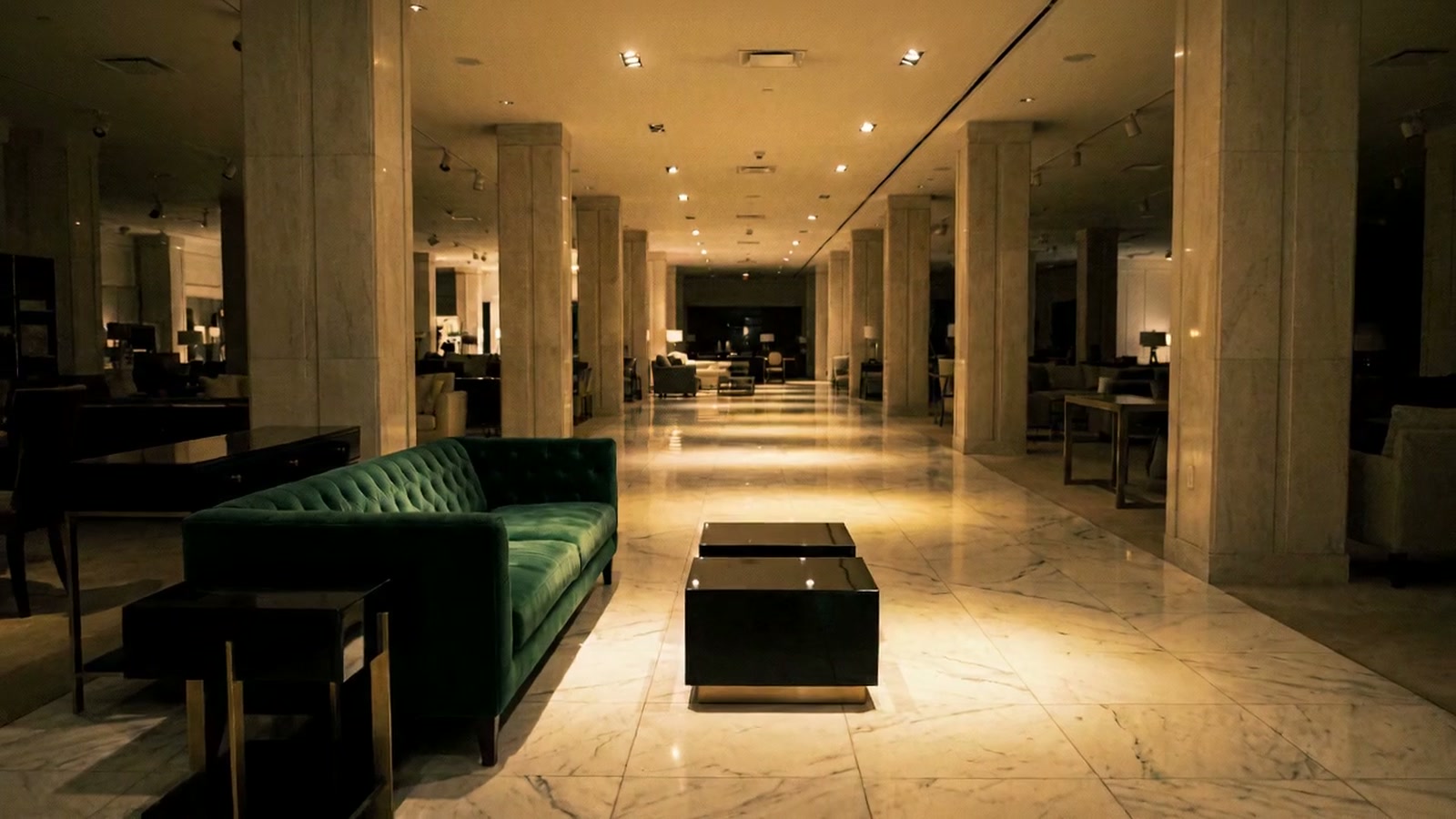
The floor, after closing.Fig. 3
What the Concierge Will Not Do
The limits, in writing
Concierges fail by sounding certain. One answers a question it had no business touching, a customer acts on it, and you hear about it at the counter. So this desk writes the limits before it writes the answers.
Guessing at Stock
If your feed doesn't say a thing is on the floor, the concierge won't say it is. It states what it knows and offers to check. A shopper who drives across town for a chair that isn't there does not make that drive twice.
Policy Made Up on the Spot
Returns, delivery windows, warranty, price. Those come from your written policy or they don't get said at all. An invented answer here becomes a refund, and you'll honour it, because something wearing your logo promised.
Passing for a Person
It says what it is, up front, before the first question. Asked directly, it answers honestly. Pretending buys a few warmer minutes and costs the trust that made the visit worth having.
When a question outgrows it, the concierge stops and hands the thread to a person. The whole conversation goes with it, so nobody makes the shopper start again. Every hand-off is logged and dated. That log is a plain list of what your customers actually want to know, written in their words rather than yours.
Getting Found Inside an Answer
No promises, only work
Placement inside an assistant's answer is not something anyone can hand you. This desk included. The answers get assembled fresh each time and they move. What sits under your control is whether the machine has anything accurate to work with, and that part is ordinary work.
I.
Make the Catalogue Legible
Structured data is how a machine reads a store without guessing. Products carry price, availability, brand and identifiers. The store record carries address, hours and the departments you actually stock.
Markup doesn't buy you a mention. It removes the excuse for leaving you out, which is a smaller claim and a truer one.
You see a markup pass on products, store and hours, with the broken items listed before the fixes.
II.
Answer the Question a Shopper Asks
People ask assistants whole questions. Does this sofa fit through a standard door. Do you deliver to Barrie. Can an online order come back to the store.
The desk gathers the questions your staff hear most, then checks where the site answers them. The answer moves near the top of the page, in the words the question used. One question, one plain answer, no throat-clearing first.
You see the real questions your staff already field, and pages written to answer each one.
III.
Keep One Identity Across the Web
Name, address, phone and hours should match everywhere a machine can find them. Business Profile drives the local surfaces. Old directory entries, a moved location, a changed suite number, all of it still counts.
Conflicting hours teach a machine to distrust the whole record. When it isn't sure about you, it names the store it is sure about.
You see the mismatches found across the web, and one corrected record pushed everywhere it belongs.
IV.
Ask the Assistants What They Say
The desk puts your questions through the major assistants and records the answers. Who gets named. What gets said about you. What's flatly wrong. Whether you appear at all.
Same questions next quarter, same format, dated. Drift shows up on its own once two readings sit side by side. Some quarters read badly, and the record says so.
You see a dated record of what assistants say about your store, and what moved since last time.
Questions from Owners
Fair ones, too
Is this a chatbot?
It's a concierge. It answers from your catalogue and your policies, and it admits what it doesn't know. It exists to book visits and capture leads, not to chat for its own sake.
What is AI findability, in one sentence?
The work that makes your store easy to name when someone asks an assistant where to buy what you sell.
Does this replace my SEO?
It extends it. The same clarity that ranks a page teaches an assistant to recommend the store behind it.
Who's accountable when the concierge gets something wrong?
This desk is. The transcript gets pulled and the cause gets named in writing, then the fix goes ahead of whatever else was queued. When the cause is a bad source rather than the concierge itself, you're told which source and what changed in it. Nobody here points at the model and shrugs.
My catalogue is short. Is any of this worth it for a small store?
A short catalogue is an advantage here. Fewer facts to keep accurate, and one identity is easy to hold straight. The concierge still earns its keep on hours, stock, delivery and booking, which is most of what people ask a store anyway.
Open after hours.
Ask for the concierge walkthrough on your strategy call. It takes ten of the thirty minutes.